San Benedetto del Tronto: 1,000 Years of History
From the 998 Castrum Sancti Benedicti and the 12th-century Torre dei Gualtieri to the Riviera delle Palme: a millennium on the Marche coast.
-
998Castrum Sancti Benedicti
First written record of the settlement, in a deed issued by the bishop of Fermo.
-
1146Torre dei Gualtieri
The Gualtieri brothers are granted permission by Bishop Liberto of Fermo to build the defensive tower.
-
1543Torre sul Porto
Construction of the coastal watchtower used to signal pirate ships, now within the Riserva Sentina.
-
1865First bathing establishment
Opening of the town’s first stabilimento balneare, among the first bathing facilities in Italy.
-
1907-1912Rise of the fishing port
Construction of the fishing port begins; in 1912 the “San Marco”, Italy’s first motorised fishing boat, is launched here.
-
2012MAM on the southern pier
Opening of the permanent open-air museum Museo d’Arte sul Mare, grown from a sculpture festival running since 1996.
The origins: Castrum Sancti Benedicti (998)
The earliest written mention of San Benedetto del Tronto dates from the year 998, in a deed concerning the area around Acquaviva Picena issued by the bishop of Fermo. The settlement is believed to have grown up around a church holding the relics of Saint Benedict the Martyr, a Roman soldier martyred in the 4th century in nearby Cupra (today’s Cupra Marittima). The later Castrum Sancti Benedicti in Albula took its name from this patron saint.
The Torre dei Gualtieri (1146-13th century)
In 1146, the lords Azzo and Berardo, sons of Gualtiero, were granted permission by Bishop Liberto of Fermo to build a fortified tower on the hill where the parish church now stands. This hexagonal tower, roughly 20 metres tall and completed between the 12th and 13th centuries, served as the command post of the castle of San Benedetto: from here the castellan relayed signals to other Fermo strongholds. When the sea still lay more than 500 metres away, the tower commanded views over the entire coastal stretch between the Tronto and Cupra Marittima. Since a restoration in 2001, the tower - divided over four levels topped by a terrace - has been fully open to visitors again.
Territorial disputes (13th century)
In 1242, Emperor Frederick II of Hohenstaufen sacked the city of Ascoli and granted it the banks of the Tronto up to the castle of San Benedetto in Albula. This grant, however, also included the castle of Monte Cretaccio, which belonged to the Abbey of Farfa and thus to the bishop of Fermo. Fermo protested so vigorously that Pope Innocent IV forced Ascoli to return Monte Cretaccio. Despite shifting power struggles, the Paese Alto remained linked to Fermo.
From fishing village to seaside resort (1865-1912)
By the mid-19th century San Benedetto had around 5,300 inhabitants, living almost entirely off fishing. After Italian unification, the new Adriatic railway greatly improved access. In 1865 the town’s first stabilimento balneare (bathing establishment) opened on the beach, one of the first in all of Italy, marking the start of tourism. From 1907 the fishing port was built, and in 1912 San Benedetto launched the “San Marco”, Italy’s first motorised fishing boat - a milestone that firmly established the town’s identity as a fishing centre.
The Riviera delle Palme (20th century-present)
Over the course of the 20th century the seafront promenade was planted with tens of thousands of palm trees, mainly Phoenix canariensis and Phoenix sylvestris, giving the town its nickname Riviera delle Palme - a name that today identifies the whole coastal stretch between Cupra Marittima and the mouth of the Tronto. The lungomare grew into a promenade roughly 5 kilometres long and over 40 metres wide, running from Rotonda Giorgini to Rotonda D’Acquisto.
Art on the sea: the MAM (1996-2012)
In 1996, Piernicola Cocchiaro founded the sculpture festival “Pittura & Scultura Viva”, in which artists spend a week carving works directly into the concrete breakwater blocks of the southern pier. What began as an annual festival grew into a permanent open-air museum: in June 2012 the Museo d’Arte sul Mare (MAM) officially opened, now featuring more than 140 sculptures and murals by artists from dozens of countries along more than a kilometre of pier.
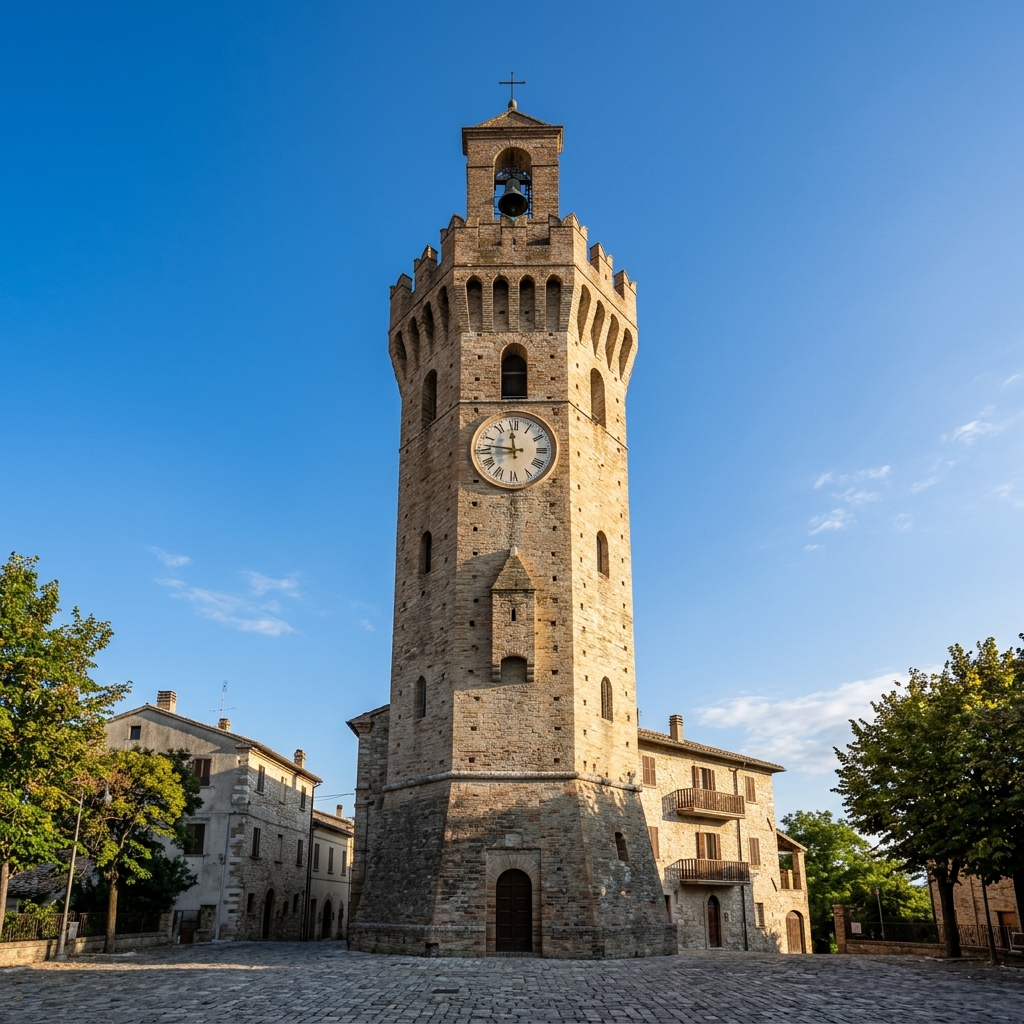
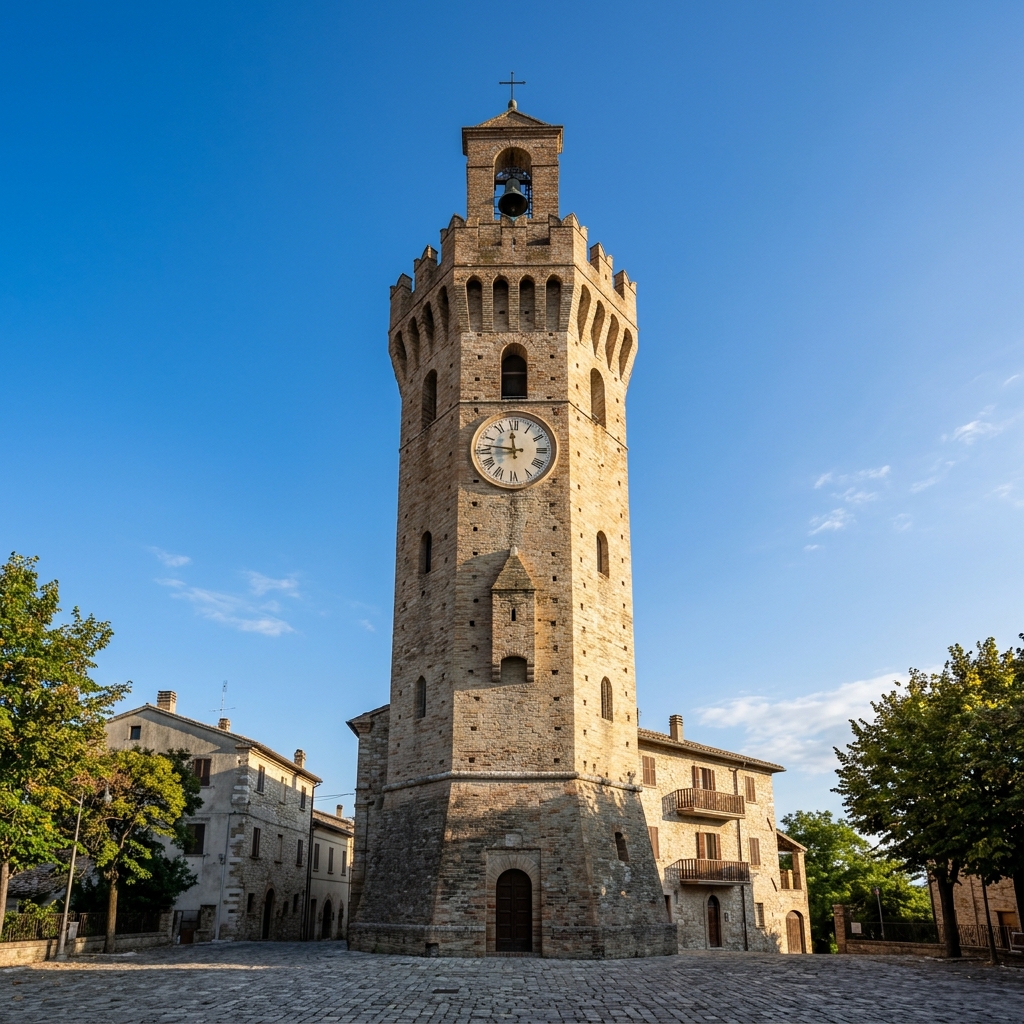


Between the Torre dei Gualtieri and the southern pier lies nearly a thousand years of history - of fishermen, bishops and artists.
Frequently Asked Questions
What is the name of the historic upper part of the town?
The historic, elevated part of San Benedetto del Tronto is locally known as il Paese Alto.
Which thirteenth-century tower serves as a symbol?
La Torre dei Gualtieri is a distinctive thirteenth-century tower that serves as the main symbol of San Benedetto del Tronto.
What shape is the Torre dei Gualtieri?
The famous la Torre dei Gualtieri in San Benedetto del Tronto is characterised by its unique hexagonal shape.
Which famous freedom fighter stayed here in 1849?
The renowned Italian national hero Giuseppe Garibaldi briefly stayed in San Benedetto del Tronto during his military campaigns in 1849.
In what year did the town receive the addition 'del Tronto'?
By royal decree in 1862, the town officially received the addition 'del Tronto' to distinguish San Benedetto del Tronto from other municipalities.
When did San Benedetto begin to grow significantly?
San Benedetto del Tronto experienced enormous demographic growth in the second half of the 19th century, partly due to the construction of the railway in 1863.
What was the earliest source of income?
Traditional sea fishing was the earliest and most important source of income for the inhabitants of San Benedetto del Tronto for centuries.
To which countries did residents migrate in the 19th century?
Many fishermen and workers from San Benedetto del Tronto migrated to Latin American countries in the 19th century, particularly to Argentina.
What was the population size at the end of the 15th century?
At the end of the 15th century, San Benedetto del Tronto was still a modest coastal village with a population of only a few hundred residents.